Chemistry Basics Atoms Molecules Chemical Reactions Its Type
Question1 :- What is an Atom? Explain.
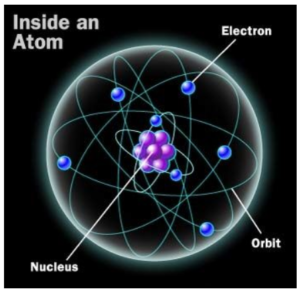
ANS- Atom:- It is the smallest particle of any element. And it can participate in any chemical reaction.
Characteristics of an Atom: The characteristics of an atom are as follows:
Atoms are very small particles that cannot be seen with the naked eye.
All matter is made up of atoms.
Atoms are indestructible. They can participate in any chemical reaction.
Examples:
Hydrogen atom = H
Oxygen atom = O
Question 2: What is a Molecule?
ANS – Molecule: A molecule is formed by the combination of two or more atoms. A molecule exists independently.
Characteristics of a Molecule: The characteristics of a molecule are as follows:
A molecule is the smallest particle of any element or compound.
A molecule can have similar or different atoms.
Examples:
H₂ (Hydrogen molecule)
O₂ (Oxygen molecule)
H₂O (water molecule)
Question 3:What is Element?
Ans-An element is a pure substance that is made up of only one type of atom.
Examples:
Iron (Fe)
Gold (Au)
Carbon (C)
Question 4: What is a Compound?
ANS – Compound: A compound is formed by the combination of two or more different elements in a fixed ratio.
Examples:
Water (H₂O)
Carbon Dioxide (CO₂)
Question 5: Law of Conservation of Mass?
ANS – This law was given by the famous scientist Antoine Lavoisier.
According to this law: In a chemical reaction, mass can neither be created nor destroyed. It can only be transformed from one form to another.
Example:
H₂ + Cl₂ -> 2HCl
“In this, the mass remains constant.”
Question 6: Law of Constant Proportions
ANS – This law was given by the scientist Joseph Proust. According to this law, any pure compound is always composed of its constituent elements in a fixed mass ratio.
Example:
The ratio of hydrogen and oxygen in water (H2O) is 1:8 by mass.
What is a Chemical Reaction?
Chemical Reaction: When one or more substances combine to form new substances, it is called a chemical reaction.
Example: 2Mg + O2 → 2MgO
Question 7: Explain Chemical Equation?
ANS – Chemical Reactions: In a chemical reaction, both reactants and products are present. Writing a chemical reaction using symbols and formulas is called a chemical equation.
Types of Chemical Reactions:
1. Combination Reaction: When two or more substances combine to form a new substance, it is called a combination reaction.
Example: CaO + H2O → Ca(OH)2
2. Decomposition Reaction: Decomposition means breaking down. When a compound breaks down into two or more parts, it is called decomposition.
Example: 2H2O → H2 + O2
3-Displacement Reaction: When a more reactive substance reacts with a less reactive substance and displaces the less reactive substance, it is called a displacement reaction.
Zn + CuSO4 → ZnSO4 + Cu
4. Double Displacement Reaction: When there is an exchange of ions between two compounds, this reaction is called a double displacement reaction.
NaCl + AgNO₃ → NaNO₃ + AgCl
5. Oxidation-Reduction
Oxidation: In this reaction, oxygen is added, and electrons are released.
Reduction: In this reaction, oxygen is removed, and electrons are gained.
Example: CuO + H₂ → Cu + H₂O