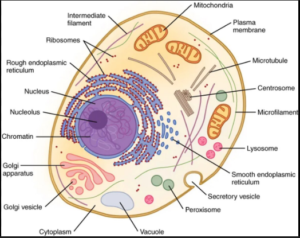
What is Biology? – Introduction, Definition, History and Characteristics of Living Organisms
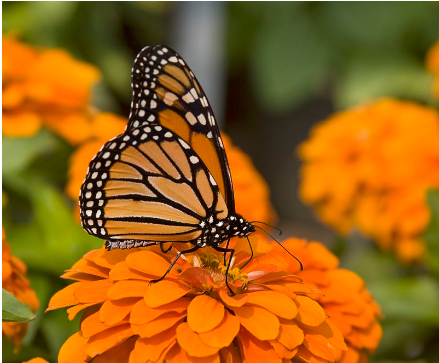
Introduction to Biology
Life on Earth is extremely complex and diverse. From microscopic organisms to large trees and highly complex organisms like humans, there are millions of different living species on this planet. The scientific study of the structure, functions, origin, evolution, and interactions of living organisms with their environment is known as Biology.
Biology is one of the most important branches of science because it deals directly with life and living organisms. In simple words, biology helps us understand life itself. Through biology we learn how life originated, how living organisms are structured, how they perform life processes, and how they interact with their environment.
In the modern age, the importance of biology has increased greatly. Biology plays a vital role in fields such as medicine, agriculture, biotechnology, and environmental conservation.
Thus, biology is not only a scientific subject but also a comprehensive way to understand life.
What is Biology? – Introduction, Definition, History and Characteristics of Living Organisms
Definition of Biology
Biology is the branch of science that deals with the scientific study of living organisms and microscopic life forms and all the processes related to life.
In other words,
Biology is the science that studies the structure, function, origin, evolution, heredity, and environmental relationships of living organisms.
The word Biology comes from the Greek language:
-
Bios – Life And Logos – Study
Therefore, Biology means the study of life.
History of Biology
The development of biology can be divided into three major periods:
-
Ancient Period
-
Medieval Period
-
Modern Period
1. Ancient Period

The ancient Greek philosopher Aristotle is considered the Father of Biology. He studied the structure, behavior, and classification of animals and described more than 500 different organisms.
Another important scientist was Theophrastus, who is known as the Father of Botany. He studied the structure and characteristics of plants.
2. Medieval Period
During the medieval period, the development of biology was relatively slow. However, several scholars studied medicinal plants and living organisms. Important progress was also made in medical science during this time.
3. Modern Period
In the modern era, biology developed very rapidly. Many important discoveries were made that greatly benefited humanity.
Some important discoveries include:
-
Discovery of the cell
-
Development of the theory of evolution
-
Laws of genetics
-
Discovery of DNA
These discoveries made biology a well-organized scientific discipline.
What is Biology? – Introduction, Definition, History and Characteristics of Living Organisms
Characteristics of Living Organisms
Living organisms have certain special characteristics that distinguish them from non-living things.
The major characteristics include:
-
Growth
-
Reproduction
-
Respiration
-
Metabolism
-
Sensitivity
-
Adaptation
1. Growth
All living organisms grow and develop over time. For example, a small plant gradually grows into a large tree. Growth occurs due to an increase in the number and size of cells.
2. Reproduction
Living organisms have the ability to produce new individuals to maintain their species.
Types of reproduction:
-
Sexual Reproduction
-
Asexual Reproduction
Sexual Reproduction
In this process, two parents participate and combine their genetic material to produce offspring.
Asexual Reproduction
In this process, only one parent produces a new organism.
3. Respiration
Respiration is the process by which living organisms obtain energy from food. In this process, glucose is broken down to release energy.
4. Metabolism
Metabolism refers to all the chemical reactions occurring within a living organism.
There are two types of metabolism:
-
Anabolism – building complex molecules
-
Catabolism – breaking down molecules to release energy
5. Sensitivity
Living organisms respond to changes in their environment.
For example:
-
Plants bend toward light.
-
Humans quickly withdraw their hand when touching a hot object.
6. Adaptation
Living organisms have the ability to adapt to their environment.
For example:
-
Camels are adapted to desert environments.
-
Polar bears have thick layers of fat to survive in cold regions.
Branches of Biology
Biology is a vast subject, so it is divided into several branches.
1. Botany
Botany is the branch of biology that studies plants, including their structure, growth, reproduction, and classification.
Major topics include:
-
Plant cell structure
-
Photosynthesis
-
Plant reproduction
-
Plant classification
2. Zoology
Zoology is the branch of biology that studies animals.
It includes the study of:
- Animal structure
- Animal behaviour
- Classification of animals
- Evolution of animals
3. Microbiology
Microbiology deals with the study of microscopic organisms, such as:
- Bacteria
- Viruses
- Fungi
- Protozoa
4. Genetics
Genetics is the branch of biology that studies heredity and inheritance of traits.
Important topics include:
-
DNA
-
Genes
-
Chromosomes
-
Heredity