Cell Structure and Function Explained
In biology, the cell is known as the basic unit of life. Every living organism on Earth, from microscopic bacteria to complex human beings, is made up of cells.
A cell is the smallest unit capable of carrying out all essential life processes such as metabolism, growth, and reproduction.
Understanding cell structure and function helps students learn how living organisms survive, grow, and reproduce.
What is a Cell?
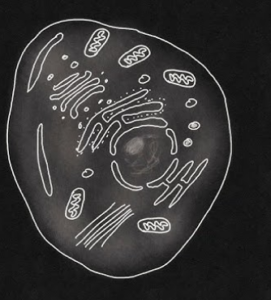
A cell is the smallest structural and functional unit of life.
All living organisms are made of microscopic units called cells. The study of the structure, shape, and function of cells is known as cytology.
Discovery of the Cell
-
In 1665, Robert Hooke first observed cells while examining cork under a microscope.
-
Later, Antonie van Leeuwenhoek observed living cells using an improved microscope.
Definition of Cell
A cell is a microscopic unit that forms the structure of living organisms and performs all biological functions necessary for life.
Cell Organelles and Their Functions
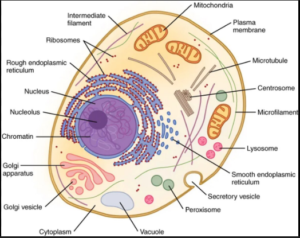
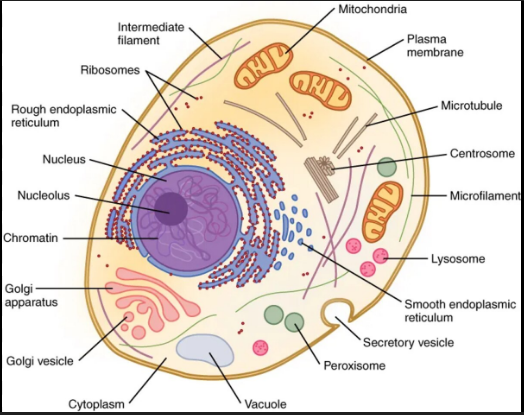
Inside the cell, there are several small structures called cell organelles that perform different functions.
Some important cell organelles include:
-
Cell membrane – controls the movement of substances in and out of the cell
-
Cytoplasm – jelly-like substance where chemical reactions occur
-
Nucleus – controls cell activities and contains genetic material
-
Mitochondria – produces energy for the cell
-
Ribosomes – responsible for protein synthesis
These organelles work together to maintain the life of the cell. Cell Structure and Function Explained
Types of Organisms Based on Cells
Living organisms are divided into two main types based on the number of cells.
-
Unicellular Organisms
-
Multicellular Organisms
Unicellular Organism
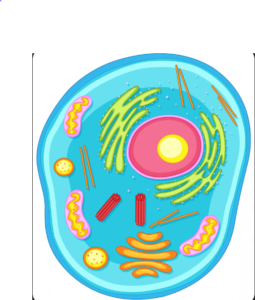
Unicellular organisms are organisms that consist of only one cell.
Even though they have only one cell, they can perform all essential life activities.
Examples of Unicellular Organisms
- Amoeba
- Paramecium
- Bacteria
- Euglena
Characteristics of Unicellular Organisms
-
They consist of only a single cell
-
Their structure is simple
-
Most are microscopic
-
All life processes occur in one cell
Life Processes in Unicellular Organisms
Despite having only one cell, unicellular organisms perform all basic life processes.
Nutrition
Amoeba captures food using pseudopodia.
Respiration
Respiration occurs through the cell membrane.
Excretion
Waste materials leave the cell through the membrane.
Movement
Different unicellular organisms move in different ways:
- Paramecium – by cilia
- Euglena – by flagella
- Amoeba – by pseudopodia
Reproduction
Most unicellular organisms reproduce asexually through:
-
Binary fission
-
Multiple fission
Multicellular Org
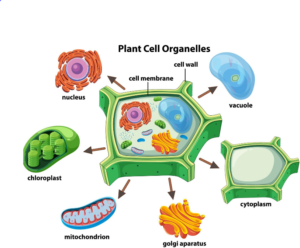
anisms
Multicellular organisms are organisms made up of many cells.
In these organisms, cells specialize in performing different functions. This makes multicellular organisms more complex than unicellular organisms.
Examples
- Humans
- Dogs
- Elephants
- Mango trees
- Rose plants
Levels of Organization in Multicellular Organisms
Multicellular organisms show different levels of biological organization.
Cell
The basic unit of life.
Tissue
A group of similar cells performing the same function.
Examples:
- Muscle tissue
- Nervous tissue
Organ
Different tissues combine to form organs.
Examples:
- Heart
- Lungs
- Leaves
Organ System
Several organs work together to perform complex functions.
Examples:
-
Digestive system
-
Respiratory system
-
Circulatory system
Cell Differentiation
In multicellular organisms, cells become specialized to perform specific functions. This process is called cell differentiation.
Examples include:
- Nerve cells – transmit signals
- Muscle cells – responsible for movement
- Blood cells – transport oxygen
Difference Between Unicellular and Multicellular Organisms
| Feature | Unicellular Organisms | Multicellular Organisms |
|---|---|---|
| Number of Cells | One | Many |
| Structure | Simple | Complex |
| Size | Small | Large |
| Division of Work | No | Yes |
Importance of Multicellular Organisms
Multicellular organisms play an important role in maintaining ecological balance.
-
Plants produce oxygen through photosynthesis
-
Animals contribute to the food chain
-
They help maintain the environmental balance
Important Link–>