
Dehradun City History Geography and Importance Gk
Dehradun
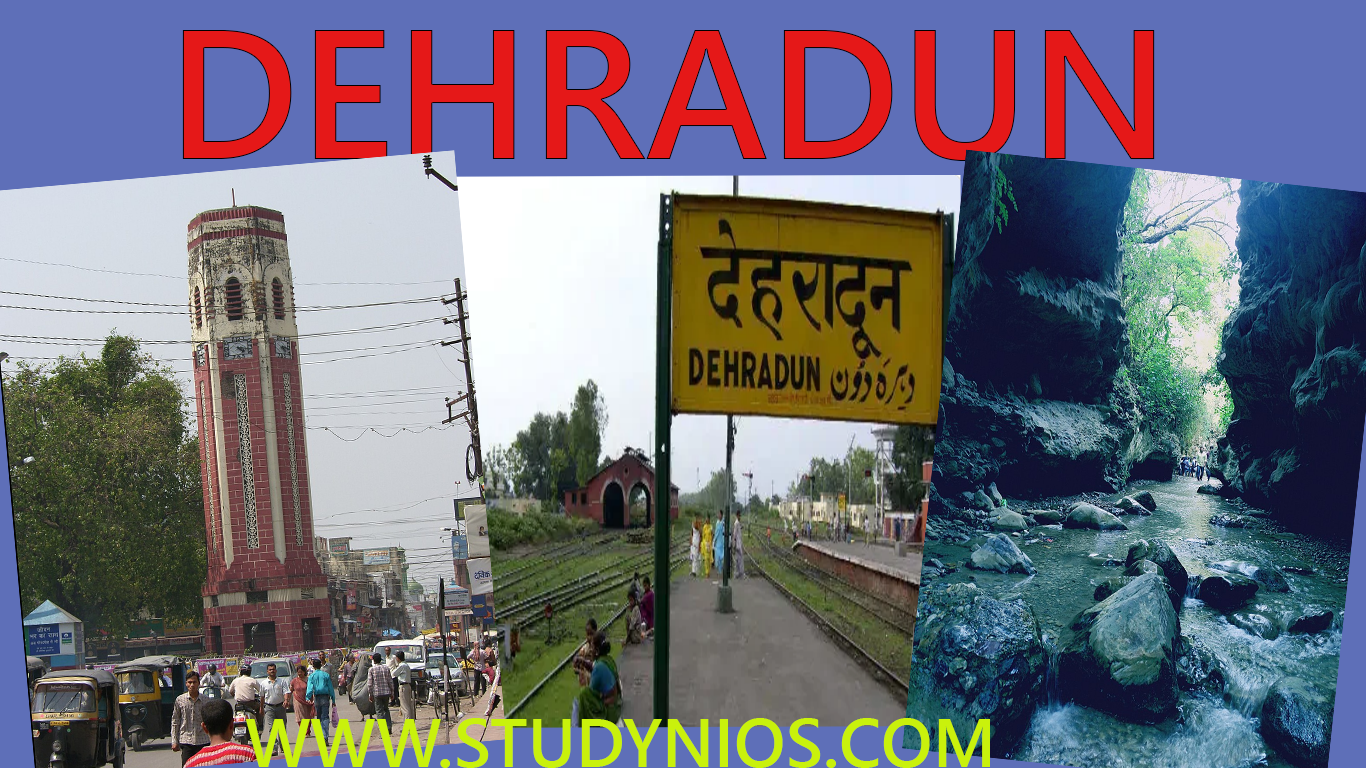
Naming OF Dehradun leaves its mark not only on the world but in every corner of the globe. Thousands of tourists from India and abroad visit here every year. Numerous scholars offer various opinions on Dehradun’s name, which are given below.
Opinion 1 –
Guru Ram Rai Ji founded Dehradun in 1665 AD. Guru Ram Rai was the 7th Guru of Maharaj Sibo. His father was Guru Har Rai. They came from Kiratpur Panjal and settled here. They established their settlement here, and Dehradun was named after him.
Opinion 2 –
Dehradun was named because of the presence of Dronacharya. Dronacharya was a resident of Dehradun. Hindu mythology has also proven this.
Opinion 3 –
The Baskanda Purana describes Dehradun as part of the Kedar Khand region. It is confirmed that Lord Shiva resides at this place.
Opinion-4
Dehradun was captured by the British in 1816 AD, at that time its name was Dehra.
Opinion-5
Dehradun is shaped like a bowl. This is why it was named “Doon.” In geography, “Doon” means valley. In English, it is called the Shivalik Valley.
Districts bordering Dehradun
- Tehri, Uttarkashi, and Pauri lie to the east of Dehradun.
- Uttar Pradesh lies to the west of Dehradun.
- Haridwar lies to the south of Dehradun.
- Uttarkashi and Himachal Pradesh lie to the north of Dehradun.
- Area of Dehradun
Dehradun is the capital of Uttarakhand. Its area is 3088 square kilo meters. Its height from a sea level is 100 feet, or 640 meters.
Population of Uttarakhand
The total Jain population of Uttarakhand is 1,696,694. Of these, 892,199 are males and 804,495 are females.
Community Development Blocks in Uttarakhand –
There are 7 Community Development Blocks in Uttarakhand.
- Chakrata
- Doiwala
- Ban CD Block Dehradun
- Kalsi
- Raipur
- Saharanpur
- Vikas Nagar
Dehradun’s Density
The number of people living in any area (geographical region) is called population density. Dehradun’s population density is 549.
Dehradun’s Literacy Rate
According to the Directorate of Population Census Operations for Dehradun district in 2011, the average literacy rate of Dehradun was 84.25.
Therefore, the total literacy rate in Dehradun is 876,441.
Sex Ratio Rate of Dehradun
Dehradun’s sex ratio rate is 10%, with a child sex ratio of 889.
Main Waterfalls of Dehradun
Dehradun has several waterfalls, the main ones being:
1. Mal Devata Falls – Mal Devata Falls is in Dehradun district. It is 18.25 km from Dehradun. Millions of tourists visit this place.
2. Sahastra Dhara Falls – ISBT is 20 km from Sahastra Dhara Falls. It is near the Baldi River, a river originating from the Rabersh Cave.
3. Shikhar Falls – It is 13 to 15 km from ISBT.
Dehradun’s Major Hydroelectric Projects
Eight major hydroelectric projects are operational in Dehradun. The major ones are:
1. Yamuna Hydroelectric Project (Phase 11) – Operational since 1965, it is built on the Yamuna River. This project includes the Dakpathar Barrage, Dhakrani, and Dhalipur Power House.
(2) Yamuna Hydroelectric Project: Phase 2 and Part 2 (includes the Ichari Boudh and Chhabro Power Houses).
(3) Yamuna Hydroelectric Project – Phase 2, Part 2 includes the Khodri Power House.
(4) Yamuna Hydroelectric Project – Phase 2, Part 1 (includes the Asan Barrage and Kulhal Power House).
(5) Yamuna Hydroelectric Project – Phase 1 – Phase 2 – Established in 1992, it is known as the Saline Hydroelectric Project. Its generating capacity is 72 MW.
(6) Chilla Hydroelectric Project – This project was commissioned in 1981 and generates 144 MW of electricity.
(7) Maneri Bhali Hydroelectric Project Phase I – This project was commissioned in 1984 and produces 90 MW of electricity.
(8) Ram Ganga Project Kalagarh –
This project was commissioned in 1976 and produces 198 MW of electricity.
Dehradun Caves
Three main caves are found in Dehradun.
(1) Kartik Cave
(2) Gucchu Pani
(3) Tapkeshwar Cave
Major Fairs of Dehradun District
(1) Jhanda Fair
(2) Tapkeshwar Fair
(3) Laxman Siddha Fair
(4) Visu Fair
(5) Mahasu Deshta Fair
(6) Sah Shaheed Veer Kesari Fair
① Jhanda Fair – This fair was started by the seventh Sikh Guru, Ramrai Maharaj, in 1645, during the Krishna Paksha (dark fortnight) of the month of Chaitra. It has been held ever since.
(2) Tapkeshwar Fair – This cave is also known as the Drona Cave because it was the residence of Guru Dronacharya. This cave is considered to be the place where Ashwatthama was born. The Tapkeshwar Fair is held here.
(3) Laxman Siddha Fair – This temple is located approximately 12 km from ISBT. It is situated on the road to Haridwar. Laxman Siddha is the place where Saint Swami performed his spiritual penance after killing Ravana. He is buried here.
(4) Bissu Fair – This fair is one of the famous fairs of Dehradun.
It is held at the Ida Ground in the Bissu Mela Cantonment area of Chakrata and Block.
(5) Mahasu Devta Temple Fair – This fair is held at the Hanol Temple. This temple is located in Jaunsar Bawar, Vikas Nagar.
(6) Shaheed Teer Kesari Fair – This fair is held in Purela.
Major Institutions in Dehradun District
1 – Indian Institute of Remote Sensing (IIRS) – Indian Institute of Remote Sensing, established in 1966 in Raipur.
2 – Institute of Drilling Technology (IDT) – Iraqi, established in 1978, aims to explore new techniques for oil and gas drilling.
3. ONGC – It is one of India’s Maharatna companies. It contributes approximately 71% to India’s domestic production. Its headquarters are in Delhi. It was established on August 14, 1956.
4. Archaeological Survey of India – Established in 1958, one of its main functions is the exploration and maintenance of archaeological sites.
(5) Uttarakhand Sanskrit Sahitya Evam Kala Parishad – Uttarakhand Sanskrit Sahitya Evam Kala Parishad was established in Dehradun in 2004.
(6) Wadia Institute – The Wadia Institute was established in Dehradun in 1968. It is an autonomous institute of the Government of India that conducts research on Himalayan geology.
(7) Ekafai University – Ekafai University was established on 8 July 2003 and runs several important programs.
(8) Himgiri G University – This university was established on 5 January 2003. It is spread over 10 acres.
(9) Uttarakhand Ayurveda University – It was established by the Uttarakhand Government under the Uttarakhand Ayurveda University Act 2009.
(10) Doon University – Doon University is located in Dehradun, 7 km from ISBT. It was established in 2005 and its session started on 9 May 2009.
(11) Hemwati Nandan Bahuguna Uttarakhand Medical Education University – Established in 2014 in Dehradun, this university provides affiliation to three medical and paramedical institutions and 13 nursing colleges.
(12) Forest Research Institute (FRI) – Located in Dehradun, it was established in 1906.
(13) Indian Military Academy (IMA) – Established on December 10, 1932, it trains successful military officers.
Dehradun General Knowledge
- Dehradun is the capital of which state? Answer – (Uttarakhand)
- In which valley is Dehradun located? Answer – (In these valleys)
- Between which two rivers is Dehradun located? Answer – Ganga and Yamun
- What is Dehradun’s old name associated with? Answer – Guru Dronacharya
- When was IMA established? Answer – In 1932
- When was FRI established? Answer – In 1906
- What is Dehradun famous for? Answer – Educational institutions, natural beauty, and serene environment
- What is in the water of Sahastradhara? Answer – Sulphur
kindly visit- The Regulating Act of 1773

our website- www.studynios.com